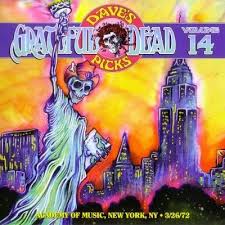
it took me awhile to get to this one, but i eventually needed to cover this release, mostly because dp 15 is scheduled to arrive any day now. dp 14 finds the band near the end of a 7 night stand at a new venue for them. the academy of music is really just a 3400 seat movie theater adapted for showcasing up and coming ny acts of the early seventies, now that bill graham has shuttered fillmore east. in a few days they would be headed across the pond to begin their legendary europe 72 tour. the first set is strong, and pigpen is featured prominently, with solid versions of ‘chinatown shuffle’, ‘mr. charlie’, and ‘big boss man’. midway through the set is perhaps my favorite version of ‘looks like rain’, mostly because jerry plays a rare pedal steel and phil’s backups vocals are great. disc 2 and 3 feature a 17 minute ‘good lovin’, a tremendous ‘wharf rat’, and then closes out with ‘not fade away/gdtrfb/not fade away’.
dp 15 is supposed to be 4/22/1978 from nashville. stay tuned.
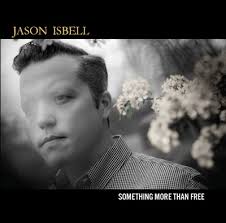
one of the biggest challenges jason faced, i am sure, when making this album, was living up to his extraordinary previous release, southeastern. my first run through of this disc encountered the same challenge, namely that i was comparing it, and it wasn’t as good. but with each new listen, it begins to stand on it’s own, and it is a fine piece of work. he has added one more addition to his portfolio that cements his reputation out there as one of the finer singer/songwriters in the field today. each song here is a story, maybe sometimes autobiographical, but always well crafted and heartfelt. he can create characters and situations and emotions like nobody’s business. same producer as ‘southeastern’, and for the most part his road band, along with lovely wife amanda shires on vocal and fiddle.
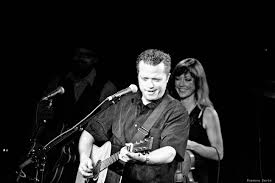
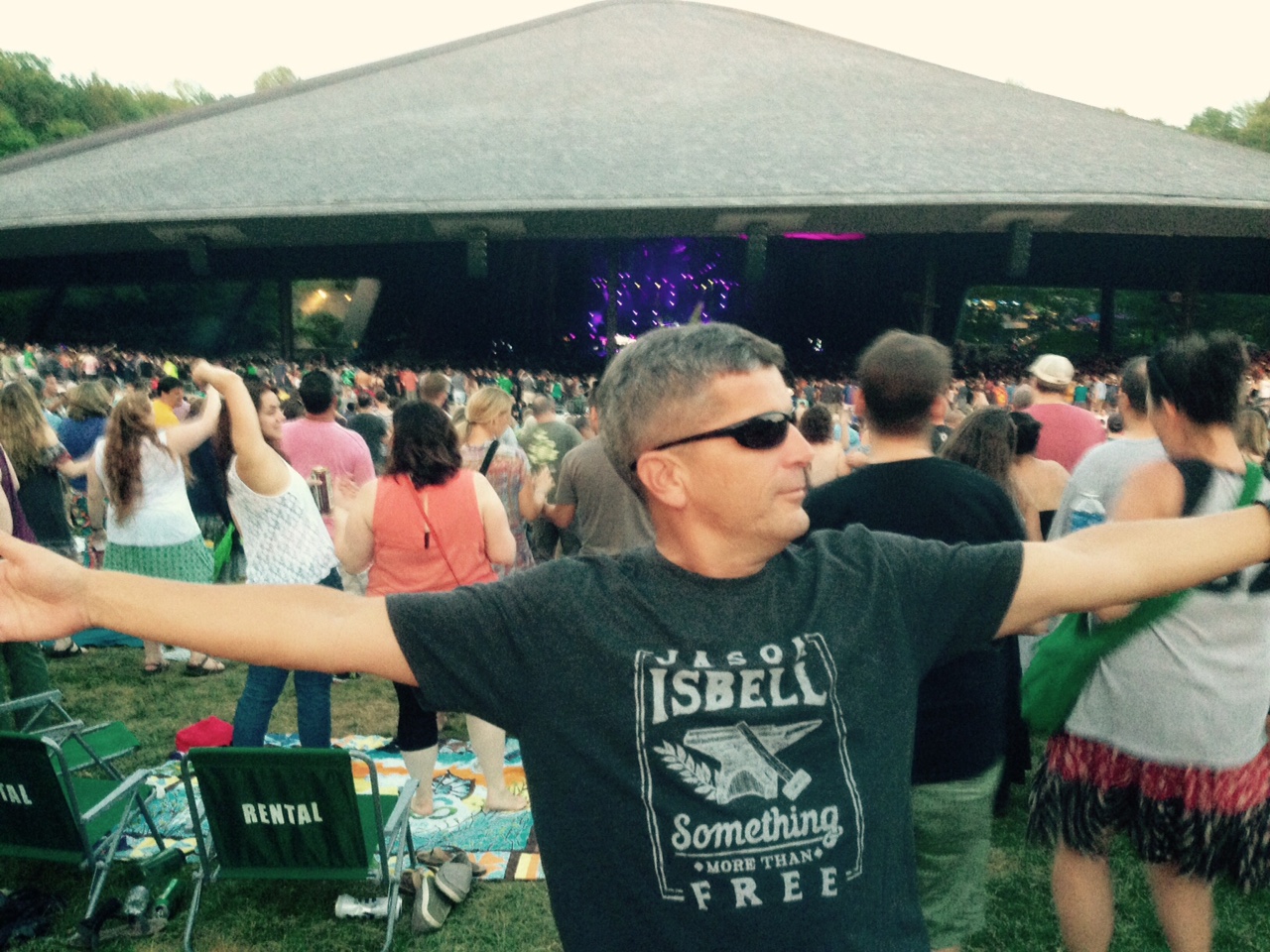
‘speed trap town’ could easily be a cut on springsteen’s ‘nebraska’, and ‘hudson commodore’ is an uplifting tale of a single woman making her way in roosevelt’s south. ‘to a band i loved’ ,and possibly ‘how to forget’, are probably about his time with drive by truckers, and his first marriage to shonna tucker. i just saw him at the house of blues a couple of months back. he has been relentlessly touring, and is worth a visit if he comes to your town. probably my favorite artist out there right now that fits into the category of ‘bands you haven’t heard of’. that is becoming less of a truism with every new release. he is building a solid career, and this is worth your consideration.
“I’m kind of picky about songwriters, you know,” says John Prine. “But when I heard Southeastern, it just killed me. I loved it. I like songs that are clean and don’t have much fat on them — every line is direct, and all people can relate to it. That’s what I try to do, and that’s what Jason does. I really haven’t heard anybody that different in probably 30 years.”
The recordings known as ‘The Basement Tapes’ have been released, officially and unofficially, in many different forms. The series of events that led up to the recordings, and the eventual influence the songs had on the musical world, are legendary, and some very good books have been written on the subject. Essentially put on tape by Dylan and members of the Band during a ‘down’ time in his career after allegedly suffering a major injury from a motorcycle accident, the recordings are rough sketches of material being worked on for various reasons. There are also multiple covers that the group seems to be using to just get some work in. Contrary to most accounts, the tapes were made in various locations around Woodstock/West Saugerties area, not just the ‘Big Pink’ house. The sessions lasted about 6 months, from May to October 1967, and a fourteen song demo was copyrighted and sent to various artists who were known to be interested in covering new Dylan material. Almost all of them were picked by someone with varied success. In 1969 a bootleg called ‘The Great White Wonder’ appeared on the scene, with original cuts from the sessions included with other Dylan material. Eventually over a hundred cuts from the sessions were shown the light of day by various bootlegs. Eventually Dylan saw fit to make an official release of some sorts, and in 1975 Robbie Robertson was given the responsibility of putting it together. Selected cuts were remixed and overdubbed, and some original work from The Band was also added (recorded at a different period).
Now Dylan has given the green light to go back and release the entire thing, unedited. With the help of Garth Hudson, the original member who actually engineered the recording, they have been offered up in two versions: ‘Complete’, which has 139 songs on 6 discs, and ‘Raw’, which selects 38 of them for a 2 CD release. I opted for the latter, but am still open to getting the bigger eventually. At a minimum, if you are a moderate Dylan fan and have an appreciation for the history of these recordings, you have to get ‘Raw’. It is totally different than the 1975 version, and the booklet that comes with it is a small novel on everything you need to know about this special event in music history. There are also plenty of pictures of them that I have never seen. Much of the dialogue in the booklet is offered up by Sid Griffin, who probably wrote the definitive book on the recordings, ‘Million Dollar Bash’. After getting ‘Raw’ I ordered the book and thoroughly enjoyed it. The songs are not polished, and most were not meant to see the light of day. But they certainly give us a glimpse into that transformative summer in Woodstock, when a group of guys were just playing in a basement for the hell of it, trying to create something new. And they did.
I would pay top dollar to be a fly on the wall of this basement for an afternoon.


 redeyegin