Author: mark

basement tapes ‘raw’

The recordings known as ‘The Basement Tapes’ have been released, officially and unofficially, in many different forms. The series of events that led up to the recordings, and the eventual influence the songs had on the musical world, are legendary, and some very good books have been written on the subject. Essentially put on tape by Dylan and members of the Band during a ‘down’ time in his career after allegedly suffering a major injury from a motorcycle accident, the recordings are rough sketches of material being worked on for various reasons. There are also multiple covers that the group seems to be using to just get some work in. Contrary to most accounts, the tapes were made in various locations around Woodstock/West Saugerties area, not just the ‘Big Pink’ house. The sessions lasted about 6 months, from May to October 1967, and a fourteen song demo was copyrighted and sent to various artists who were known to be interested in covering new Dylan material. Almost all of them were picked by someone with varied success. In 1969 a bootleg called ‘The Great White Wonder’ appeared on the scene, with original cuts from the sessions included with other Dylan material. Eventually over a hundred cuts from the sessions were shown the light of day by various bootlegs. Eventually Dylan saw fit to make an official release of some sorts, and in 1975 Robbie Robertson was given the responsibility of putting it together. Selected cuts were remixed and overdubbed, and some original work from The Band was also added (recorded at a different period).

Now Dylan has given the green light to go back and release the entire thing, unedited. With the help of Garth Hudson, the original member who actually engineered the recording, they have been offered up in two versions: ‘Complete’, which has 139 songs on 6 discs, and ‘Raw’, which selects 38 of them for a 2 CD release. I opted for the latter, but am still open to getting the bigger eventually. At a minimum, if you are a moderate Dylan fan and have an appreciation for the history of these recordings, you have to get ‘Raw’. It is totally different than the 1975 version, and the booklet that comes with it is a small novel on everything you need to know about this special event in music history. There are also plenty of pictures of them that I have never seen. Much of the dialogue in the booklet is offered up by Sid Griffin, who probably wrote the definitive book on the recordings, ‘Million Dollar Bash’. After getting ‘Raw’ I ordered the book and thoroughly enjoyed it. The songs are not polished, and most were not meant to see the light of day. But they certainly give us a glimpse into that transformative summer in Woodstock, when a group of guys were just playing in a basement for the hell of it, trying to create something new. And they did.

news_19988_0

I would pay top dollar to be a fly on the wall of this basement for an afternoon.

Roger McGuinn selected this one for the Byrds:

This is the best version of this song I know:

a little Johnny Cash:

merl saunders and jerry garcia at the keystone july 10th and 11th, 1973

This is fast becoming one of my top solo Garcia recordings. Recorded over two nights at a dive bar in Frisco in July of 1973, it captures Jerry in what I consider to be the creative peak of his career. Taking a break from a tremendous run with the Dead and the release of the Europe 72 album, he was simultaneously playing with Merl at the bars, and also touring with the bluegrass band Old and In the Way (Grisman plays on a Dylan tune here). Merl takes Jerry on totally different tangents than most fans would expect at the time, introducing him to old standards like My Funny Valentine, Motown bits, a little Elvis, Jimmy Cliff reggae, and of course letting Jerry pay his homage to Dylan. The Bob has often stated that he thought Garcia was one of the best interpreters of his music, and there may be no better example of this than his version here below of Positively Fourth Street (Dawg on mandolin). There is a not a single a Grateful Dead song on all four discs. A handful of songs are duplicated in the two shows here, but it is a minor quibble. The playing is excellent and inspired,  and it is clear they are there for the sheer joy of just letting it air out. Betty Cantor was at the recording helm, and it is evident. The sound is clean and crisp. Listen up.

Here they tear up Mystery Train:

You may never hear Jerry sing better than this;

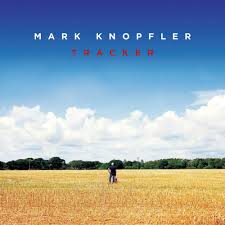
Mark Knopfler – ‘Tracker’

If you have heard a Dire Straits song lately and wondered whatever happened to them, then you may not be aware that their songwriter and main musical driver was Mark Knopfler, and that he has been still making great music for the past three decades. If you want to get reintroduced to his career, this is a great place to start. He always was a great songwriter, but he gets better with age. A collection of songs of real and imagined characters, riding on top of a musical bed utilizing his old Dire Straits building blocks, infused with celtic influences.  A fairly eclectic mix of approaches, this album is like a well fitting sweater from your closet that never really goes out of style, always feels comfortable when you slip it on, and makes you appreciate it’s composition and simplicity. This is a good pickup for your summer playlist.

Here is a long form video where he walks through the construction of most of the tracks:

tell me this couldn’t  have been mistaken for a track on the straits’ first three albums:

official launch

welcome to my new website. i hope you enjoy it. my sole purpose for building this site is to share things from the music world that i have found to be worth a look. i will be reviewing and commenting on new releases, dvds, old classics, and other content. please consider following me and sharing with others if you like it.

in case you were wondering where the name comes from, here is a song that should provide a clue:

brown eyed women, dave’s picks vol. 9:

also see the bottom of the page for more information.

mark